
Remodeling
Deck Removal and First-Refresh Remodels in Wentzville
Whole streets in Wentzville went up together and now age together. The original deck is usually the trigger. How to size and stage a first-refresh season, from ledger to footings.
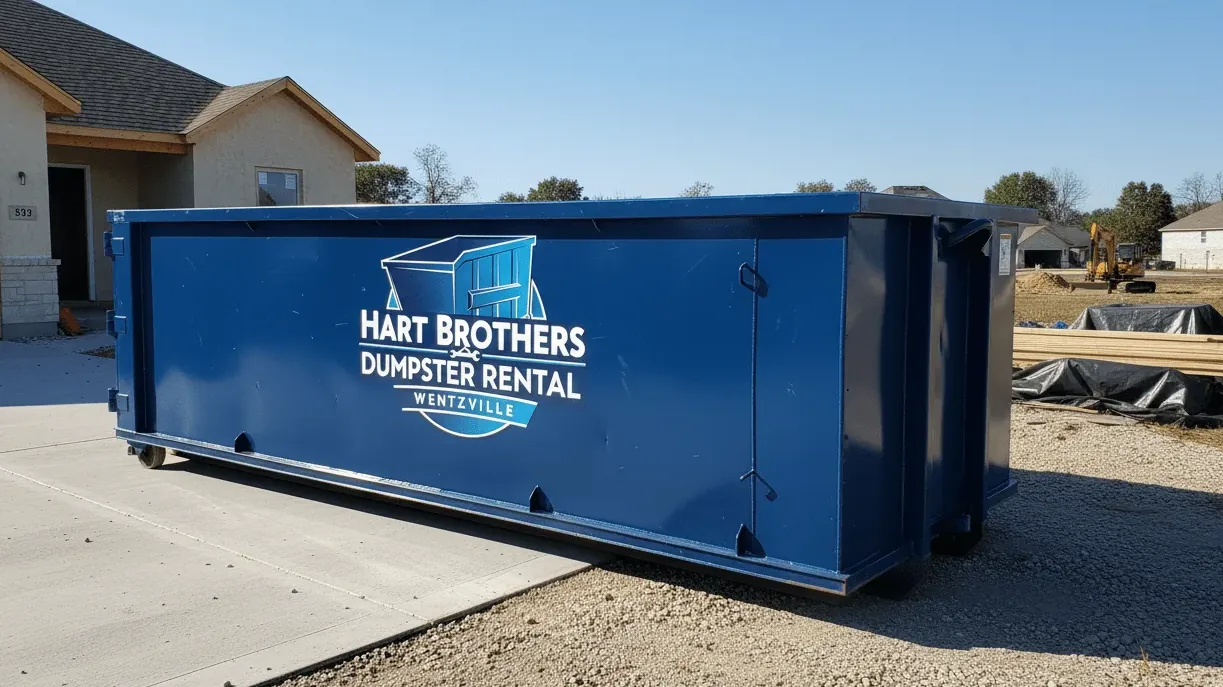
Drive the subdivisions off Highway Z, Highway N or Peine Road and you can date the street from the curb. Those houses went up inside three or four years of each other, and the same crew hung the same decks off the same band joists. So they wear out together. One deck comes down in April, two neighbours ask who did it, and by July there are four containers on that block.
The deck is almost always the trigger. It is the part of the house you stand on, so it tells you it is finished before anything else does. But once there is a contractor in the driveway, the rest of the list surfaces — the roof patched twice, the kitchen with the soffit and laminate tops, the hall bath nobody has touched since the house was built. That is a first refresh, and here is how to stage the debris side of it.
Why the whole street is aging at once
Wentzville has been one of the fastest-growing cities in Missouri for two decades, and growth that fast builds in waves. A 1996 or 2003 subdivision is one cohort, not a mix of ages, so the failures arrive as a cohort:
- Original treated decks at twenty to thirty years, past the fasteners and framing even where the boards look passable.
- Second and third roofs, because hail has taken a layer since the original shingle went on.
- Original kitchens and hall baths — builder cabinets, laminate tops, a drywall soffit, a tiled tub surround.
- Original vinyl chalking on the south elevation, and builder windows fogging between panes.
- Lower levels finally getting closed in — a large job of its own, covered in our guide to basement finishing and cleanout debris in Wentzville.
Any one of those is a container. Two or three in one season is a plan worth making before the first crew shows up.
What actually fails on a twenty-year-old deck
Homeowners notice the decking, because that is the surface. It is rarely the reason the deck has to go. The reasons are underneath.
Treated southern yellow pine goes soft at the ledger first, where water has been running behind the board for years. Joist hangers and the nails through them rust out, often because the hardware predates the newer, more corrosive treatment chemistries. Posts wick water up from the footing and go punky at the base. Railings loosen at the post connections until they will not hold a 200-pound lateral load, which is what an inspection report checks. And early composite decking from the late 1990s delaminates, cups and grows mould under the eave, and plenty of it is coming off right now.
Once two or three are true at once, repair stops making sense and it becomes a demo job.
The debris is heavier and bulkier than the footprint suggests
People size a teardown off the deck area, which understates it badly. A 16 by 20 deck is 320 square feet of floor, but you are not throwing away a floor:
- Decking boards — the volume everybody pictures.
- Joists, usually 2x8 or 2x10 at 16 inches on centre, plus blocking.
- Beams, often doubled or tripled 2x10s, dense and long.
- Railings, balusters and cap rail — awkward, springy, terrible to pack.
- Lattice or board skirting, and whatever has been stored behind it.
- Stair stringers and treads, heavy for their size.
- Posts set in concrete footings, the dense surprise at the bottom of the job.
Those footings catch people out. A deck on a dozen posts has a dozen concrete cylinders in the ground, a foot wide and two to three feet deep. Homeowners either leave them and regret it when they regrade, or pull them and find the container suddenly heavy. If they are coming out, they load like the material on our concrete and heavy debris service and belong in a small box, not stacked on a full load of framing.
Treated lumber goes in the container, not the fire pit
Do not burn pressure-treated lumber. Older material may carry chromated copper arsenate and newer material carries copper-based preservatives; burning either puts the preservative into the smoke and concentrates it in the ash. It is not firewood for the deer camp out toward Foristell. It rides in the container as construction debris, offcuts included — keep them out of the brush pile. Our page on what can go in a dumpster in St. Charles County covers the rest, and both Missouri DNR and the EPA publish current guidance, which does change — confirm before you assume.
Demo sequence, and why the ledger comes last
Take it apart in the reverse order it went together and the load stages itself:
- Railings first. They come off fast and they are the worst thing to trip over.
- Decking next, board by board. Hidden clips on composite need a different approach than screwed pine.
- Framing. Joists, then beams, cut down before they go in so the box packs instead of bridging.
- Posts and footings, once nothing is bearing on them.
- The ledger, carefully and last.
That is the step to slow down on. The ledger is bolted through the band joist, and on decks this age the flashing above it is missing, wrong, or a strip of felt tucked behind the siding. Twenty years of water has gone somewhere. Pry it off in a hurry and you tear out siding, sheathing and trim you were not planning to replace.
What you find underneath
Roughly a third of the teardowns we run turn into something bigger the day the ledger comes off: rot in the band joist where the water tracked, failed flashing, sill plate damage in the worst cases, and a section of vinyl and housewrap that has to come off for the repair and will not go back on, because nobody has matched that colour since 2004.
Plan for it. Order the box for the deck and keep the swap conversation open. If the repair grows, our demolition debris containers are the same trucks and the same driveway.
The rest of the first-refresh list
Once the deck is down, the rest queues up. Each throws off different debris, and that determines the box.
| First-refresh project | Dominant debris | Container size | The thing that catches people out |
|---|---|---|---|
| Deck teardown, 300–400 sq ft | Treated framing, decking, railings, skirting | 20 yard | Long members bridge the box — cut them or haul air |
| Concrete footings pulled | Concrete cylinders, clay spoil | 10 yard, separate load | A dozen footings weigh out a small box on their own |
| Kitchen gut | Cabinets, laminate tops, soffit drywall, appliances | 20 yard | The soffit and old flooring layers double the estimate |
| Hall bath | Cast-iron tub, vanity, tile surround, subfloor | 10 yard | Tiny footprint, brutal weight — tub and tile alone |
| Flooring, whole main level | Tile with backer and thinset, or carpet and pad | 10–15 yard tile; 20 yard carpet | Tile is dense, carpet is bulky — opposite problems |
| Roof tear-off, 25–35 squares | Shingles, felt, sometimes a second layer | 20–30 yard | Layers, not area — two layers is two loads of weight |
| Vinyl siding and windows | Siding, housewrap, trim, sashes, glass | 20–30 yard | Very light, very bulky — volume runs out first |
| Basement finish | Framing offcuts, drywall, carpet, stored items | 30 yard | The pre-clear is half the load |
On the roof, size by squares and layers, not by the look of the house. Our roofing tear-off size guide walks the arithmetic, and our roofing dumpster rental puts the box where the crew can shovel straight in.
Weight and volume pull opposite ways on the same street
Deck framing, siding and carpet are volume problems: they fill a box and barely register on the scale. Footings, tile with thinset and backer, a cast-iron tub and a two-layer roof weigh out in a box that still looks half empty.
Mix them and you pay for the worst of both: full and overweight. Two right-sized loads beat one wrong one. A 20 yard roll-off is the workhorse for deck and kitchen debris, a 30 yard earns its keep on siding and basement work, and a 10 yard suits footings, tile and bath demo. If you are unsure, our Wentzville sizing guide has more examples.
Timing: everybody calls in the same eight weeks
Deck season is spring through early summer, exactly when hail season loads the same calendar with roofers. One bad cell across St. Charles County and every crew from O'Fallon to Foristell is booked, containers included. If your job is planned rather than reactive, book early or push to fall — quieter, and better weather.
The other rhythm is GM Wentzville Assembly. This is a shift-work town, and these projects happen on weekends and during shutdown weeks, because that is when people are home. Those weeks concentrate demand hard. We run same-day and next-day delivery and next-day swaps, but the week the plant is down is not the week to discover you needed a second box.
Placement in a subdivision driveway
The driveway is nearly always right: close to the deck, no permit question, no parking fight. Protection boards go under the wheels and rollers on every drop, and they matter because freeze-thaw and ice storms have already cracked a lot of these twenty-year-old aprons and the expansive clay keeps moving the slabs. We want to see existing cracks first — our page on protecting a driveway during delivery covers the walkthrough.
The other is overhead. A hoist arm needs real vertical clearance to set and pick up a box, and the silver maples and Bradford pears these subdivisions were landscaped with have grown into that space. Check limbs and service drops before delivery. If the only spot is the street, the City of Wentzville handles permits, and requirements change, so confirm rather than assume.
Separate what is worth separating
Treated lumber is landfill material, but not everything is. Clean untreated lumber — framing offcuts from a basement or kitchen job — gets ground rather than buried. Scrap metal has value and comes off these jobs steadily: aluminium and steel railing, joist hangers, old appliances, cast-iron. Our notes on recycling and disposal in St. Charles County cover where those streams go.
Missouri bans yard waste from sanitary landfills. If you clear brush or overgrown shrubs to get at the deck — and you usually do — that material cannot ride in the construction load. It rides as a separate clean load to a composting facility, which is what our yard waste removal containers are for. Oak, hickory and maple limb wood is far heavier than people expect, so keep those loads modest. Confirm acceptance rules with St. Charles County, since programmes get revised.
Pre-1980 is a different conversation
Most houses in this wave are not old enough for it. But if yours is in older downtown Wentzville, on acreage west of town, or dates before 1980, stop before you cut. Asbestos turns up in floor tile and mastic, pipe and duct wrap, siding and roofing felt, and pre-1978 homes carry lead paint under the EPA renovation rule. Testing is cheap next to the alternative. We cannot accept asbestos-containing material in any container, and demolition generally triggers inspection and notification through the state programme. Verify current rules before scheduling.
Get the container staged before the first board comes up
The homeowners with the easiest first refresh call before demo day, say what the whole season looks like, and size the box for the job in front of them instead of splitting the difference across three. Cole and Wes have run roll-offs in Wentzville, St. Charles County and the western metro since 2015 — licensed and insured, flat-rate pricing, protection boards standard, same-day and next-day delivery, next-day swaps for when the ledger surprises you. Tell us what is coming off the back of the house and we will tell you what to put in the driveway. Call (636) 538-6201 and we will get you on the calendar before the spring rush closes it.
Questions this guide did not answer? Call (636) 538-6201. We would rather spend two minutes on the phone than have you order the wrong container.